Kestia: A Modern Display Typeface for Handmade Brands
If you’ve ever held a beautifully labeled candle, admired a wedding welcome board with graceful curves, or paused to read a boutique gift tag that felt both timeless and fresh—you know how much a single typeface can shape perception. That’s where Kestia steps in. It’s not just another decorative font—it’s a thoughtfully crafted display typeface rooted in early Art Nouveau elegance but refined for today’s handmade marketplace. As someone who designs printable planners, cuts vinyl for farmhouse signs, and hand-presses greeting cards for local boutiques, I’ve tested dozens of display fonts—and Kestia stands out for its balance of charm and clarity.
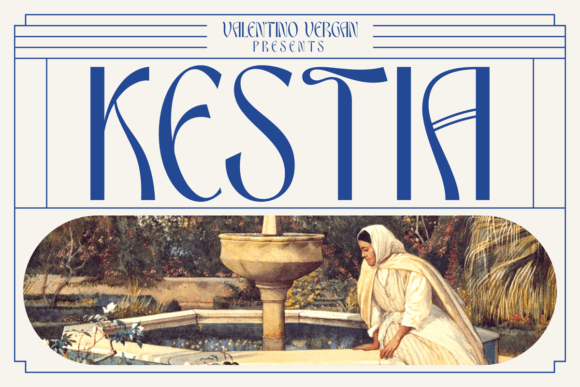
Kestia leans into the Neue Nouveau style: think fluid strokes, subtle contrast, and organic rhythm—but without sacrificing legibility at small sizes. Its letterforms carry quiet confidence—slightly upright, gently tapered, with delicate terminals that nod to historic typography while feeling unmistakably current. Unlike overly ornate scripts or rigid geometric displays, Kestia breathes. It works on a linen tea towel label as gracefully as it does on a 24-inch acrylic wedding sign.
For physical product makers, readability is non-negotiable—and Kestia delivers. At 18–24 pt, it cuts cleanly on Cricut and Silhouette machines, especially when using solid weight variants. On matte sticker paper or kraft tags, its open counters and generous x-height keep words crisp even after die-cutting or heat-pressing. I used it for a set of seasonal soy candle labels (lavender, cedarwood, bergamot), and customers consistently commented on how “elegant but approachable” the packaging felt. That’s Kestia doing quiet brand work: elevating perceived value without shouting.
It shines brightest in short-form, high-impact contexts: product names, collection headers, invitation headlines, shop signage, and SVG-based wall art. Think “Honey & Thyme Bakery” stamped on a canvas tote, “Est. 2021” etched onto a wooden cheese board, or “You’re Invited” floating above watercolor florals on a bridal shower invite. Because it’s a display typeface—not meant for body text—Kestia thrives where attention needs to land fast and stay memorable. Avoid using it for full paragraphs or ingredient lists, but lean into it for titles, monograms, quotes, and decorative accents.
Seasonal crafters will love how naturally Kestia adapts. Its soft geometry reads as romantic for Valentine’s Day cards, grounded and earthy for autumn market banners, and effortlessly refined for holiday gift tags. Last December, I paired it with a warm charcoal serif for a limited-edition mug series—“Cozy Hours,” “First Light,” “Slow Mornings”—and the combination gave each piece a boutique-level polish that translated directly into repeat orders.
Font pairing is where Kestia reveals its versatility. Try anchoring it with a clean, low-contrast sans serif like Montserrat or Inter for labels and digital printables—this combo gives structure without stiffness. For wedding stationery or artisanal soap packaging, pair it with a delicate script (think flowing, not fussy) to create visual hierarchy and emotional warmth. And if you’re designing planner covers or printable quote art, let Kestia hold the headline while a gentle serif handles subheads or dates. The key is contrast: Kestia’s expressive character needs breathing room and balance.
Before downloading, check what’s included. Most Kestia packages offer multiple weights (Light, Regular, Bold), true italics, ligatures for smoother word flow (especially helpful in “ff”, “fi”, “fl”), and stylistic alternates—like swashed capitals or flourished lowercase “g” and “y”—that add personality to invitations or social media graphics. If your shop serves international customers, verify multilingual support: many Kestia versions include extended Latin characters, making them safe for bilingual baby announcements or EU-based Etsy listings.
One practical note every seller must consider: commercial licensing. Kestia is a premium font—and its license explicitly permits use in physical products (stickers, mugs, apparel), digital downloads (PDF planners, Canva templates), SVG files for cutting machines, and client work—as long as you’re not reselling the font file itself. That means you can embed Kestia in your printable wall art, use it to design SVG files for your Etsy shop, or brand your entire product line without legal hesitation. Just keep your license receipt handy; it’s peace of mind wrapped in a PDF.
What sets Kestia apart isn’t just how it looks—it’s how it behaves across mediums. It holds up under foil stamping, translates well to embroidery digitizing (when simplified), and previews accurately in mockups because its metrics are tightly engineered. When I designed a set of reusable cotton produce bags with “Farm Fresh” printed in Kestia, the font retained its grace even at 12 pt on fabric—a rare win for display fonts.
Whether you're launching your first Etsy shop or refreshing a decade-old brand identity, Kestia offers something rare: expressive beauty that doesn’t compromise function. It’s the kind of typeface that makes customers pause, smile, and remember your name—not because it’s loud, but because it feels intentionally, quietly right.